Born to Be Awesome
First Impressions: Bright, Bold, and Built for Joy
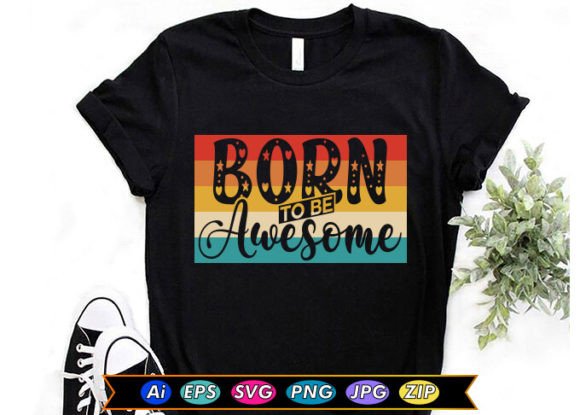
When I opened Born to Be Awesome for the first time, I didn’t just see text—I saw a mood. It’s cheerful without being cutesy, confident without shouting, and clean without feeling sterile. The letterforms have gentle curves and consistent weight—no fragile serifs or overly tight kerning—so it reads instantly at a glance. That matters when you’re stitching onto a busy tote bag or a baby onesie where clarity trumps cleverness. As a machine embroidery design, it feels like it was conceived *for fabric*, not just screen display. The spacing between letters gives breathing room for satin stitch definition, and the overall width suggests it’ll sit comfortably on a chest placement or centered across a sweatshirt back.
A Real-World Test: Embroidering It on a Linen-Cotton Kitchen Towel
Last week, I used Born to Be Awesome for a small-batch order of embroidered kitchen towels for a local boutique. We chose natural linen-cotton blend—textured, slightly uneven, and unforgiving with dense fill stitches. I hooped it with medium-weight tear-away stabilizer, tested thread colors (navy on cream, then charcoal on oat), and ran a single sample before committing. The result? Crisp edges, no puckering, and zero thread breaks—even through the “B” and “A,” which carry the most curve density. Customers loved how the phrase felt warm and uplifting without leaning into cliché. One even asked if we offered matching aprons (we did—and Born to Be Awesome scaled beautifully to that wider format).
Where It Shines—and Where It Needs Thought
Born to Be Awesome works especially well for:
- Custom apparel: T-shirts, crewneck sweatshirts, and relaxed-fit tees—especially in chest or sleeve placements.
- Embroidered patch projects: Its balanced proportions hold up cleanly when cut and fused.
- Baby embroidery: Soft enough for onesies and burp cloths, bold enough to read on tiny garments.
- Holiday embroidery and personalized gifts: Think holiday tea towels, gift-wrapped pillow covers, or monogrammed totes for teacher appreciation.
- Small shop product lines: It pairs effortlessly with minimalist branding—no extra graphics needed.
But here’s what I watch closely:
- Thin or stretchy fabric: On lightweight jersey or ribbed knits, use cut-away stabilizer underneath and reduce stitch density slightly—those smooth curves can pull if the base isn’t fully supported.
- Curved surfaces like caps: The design fits well in a standard 4×4 hoop, but test placement first. The “w” and “e” corners may need slight digitizing tweaks for optimal cap curvature—check your embroidery file’s vector paths in AI or SVG before auto-hooping.
- Dark fabric backgrounds: The transparent PNG is perfect for mockups, but always verify contrast in real thread. Navy-on-black reads well with matte rayon; avoid light metallics unless you’re going for intentional subtlety.
- Frequent-wash items: Like kitchen towels or baby clothes—confirm stitch density isn’t too aggressive. Overly dense fills can stiffen fabric over time. A light fill stitch + satin outline often outperforms heavy coverage.
Design Assets That Support Real Craft Business Needs
The file package—JPG, AI, SVG, EPS, and transparent PNG—is exactly what a craft business or Etsy seller needs. The JPG lets me drop it into Canva for social posts. The AI and SVG files let me resize without pixelation for large-format patches or boutique signage. The EPS holds up in professional print workflows, and the PNG makes quick work of printable mockups for my Etsy listings. No guesswork, no re-tracing—just editable, production-ready design assets.
As a designer who reviews hundreds of embroidery files a year, I appreciate that Born to Be Awesome doesn’t try to be everything. It’s not an applique design with layered elements, nor does it rely on intricate running-stitch flourishes. It’s focused. That focus translates directly to reliability in commercial embroidery: fewer thread changes, faster run times, cleaner finishes, and less chance of customer returns due to misread text.
What This Design Says About Your Finished Product
When a customer sees Born to Be Awesome stitched onto a handmade tote or baby blanket, they don’t just read words—they register intention. It signals care in selection, confidence in execution, and alignment with values like positivity and authenticity. That builds trust. It also elevates perceived value: a simple phrase, well-executed, feels more premium than a cluttered graphic. For Etsy sellers, that translates to better reviews, higher repeat rates, and stronger brand consistency across listings.
Practical Designer Notes Before You Stitch
Before using Born to Be Awesome in your next project, take five minutes to:
- Test on scrap fabric matching your final product’s texture and weight.
- Check thread color contrast on both light and dark backgrounds—don’t assume navy looks rich on charcoal until you’ve stitched it.
- Review stitch density: if your machine struggles with tight fills, simplify where possible—especially in rounded letters.
- Confirm hoop size compatibility—this design fits comfortably in a 4×4, but double-check before loading into your embroidery software.
- Inspect small details in the AI or SVG file—look for stray anchor points or overlapping paths that could cause glitches during auto-digitizing.
- Use proper stabilizer: medium tear-away for stable wovens, cut-away for knits, and fusible for lightweight linens.
- Verify licensing terms—since this is listed as a Graphics/T-Shirt Designs asset, confirm whether commercial use (e.g., selling finished embroidered goods or digital bundles) is permitted.
Born to Be Awesome isn’t flashy—but it’s dependable, versatile, and quietly professional. It’s the kind of embroidery file that earns repeat use, not just one-off novelty. Whether you're stitching for a holiday pop-up, building a signature line for your craft business, or personalizing gifts for friends, it delivers clarity, charm, and craftsmanship—every single time.