Will Trade Brother for Easter Candy Eggs: A Designer's Review
The Immediate Mood: Humor for Holiday Projects
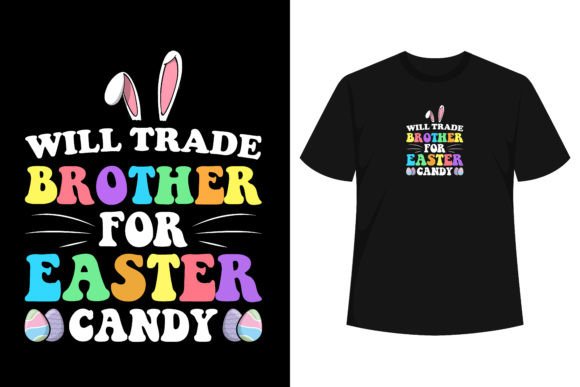
When you first look at Will Trade Brother for Easter Candy Eggs, the mood is instantly clear. It’s playful, nostalgic, and taps into that childhood Easter feeling where candy trumped everything. The title itself is the graphic, suggesting a simple, bold statement. This isn’t a detailed illustration; it’s a personality piece. For an embroidery designer, that means it’s about conveying a vibe rather than intricate artwork. The layout is straightforward, likely centered text, which immediately tells me this design belongs on items meant for fun, gifts, and lighthearted holiday spirit.
Where This Design Shines in Real Projects
I picture this design stitched onto a cozy, washed-cotton sweatshirt for a teen, or as a standout feature on a canvas tote bag for a sibling gift. It’s perfect for custom apparel with a personal touch—think a brother-sister duo getting matching hoodies. The theme lends itself beautifully to holiday embroidery projects: embroidered pillow covers for a spring-themed living room, a cheerful kitchen towel, or a decorative patch sewn onto a denim jacket. For small business owners, especially Etsy sellers focusing on personalized gifts, this offers a ready-made, relatable sentiment. Imagine it on a baby’s bib or a toddler’s t-shirt for a funny family photo—it creates an instant story.
Because it falls under T-Shirt Designs and Graphics, its strength is in clean, impactful text. In machine embroidery, that translates well to projects where readability and a bold statement are key. It would work very well for embroidered patches that can be applied to various items, or directly onto caps and aprons for a boutique, craft fair product. The value here is in its visual appeal through humor, which boosts buyer engagement and makes a product feel like a unique, handmade product rather than generic merchandise.
Scenarios to Approach with Care
While the design is charming, its successful translation into stitching requires some practical thought. If the lettering is particularly small or has thin details, you’d need to be cautious on small hoop sizes or textured fabrics like fleece, where stitch clarity can get lost. On dark fabric, you’ll need to ensure your thread color choices—likely bright whites or pastels for the Easter theme—provide strong contrast. Stitch density in the fill of any accompanying graphical elements (like candy or egg outlines) should be checked; too dense on a thin fabric like a standard t-shirt could lead to puckering.
Applying it to curved surfaces like caps requires testing the layout to ensure the text doesn’t distort. Also, for products destined for frequent washing, like baby clothes or kitchen linens, a robust satin stitch or fill stitch construction will be important for longevity. The professionalism of your finished work depends on addressing these points upfront.
Turning a Graphic into a Stitched Reality
My process for a design like this always starts on scrap fabric. I’d test the embroidery file on a similar material to my target project—say, a piece of sweatshirt fleece if that’s the end goal. This lets me review the small details, check the thread color contrast, and see how the stitch density behaves. I always recommend running the design in a black and white mockup as well, to see how it holds up without color, which informs its strength as a graphic.
Using the proper stabilizer is non-negotiable, especially for any fabric with stretch or texture. Before committing to a commercial embroidery run for my small shop product line, I’d stitch it on both a light and dark background sample. This not only tests practicality but also helps visualize it for printable mockups and digital product previews for my online store.
A Crucial Note on Licensing and Use
The product description mentions a “T-Shirt Style” store and Print On Demand designs. This suggests the design is intended for commercial use, but as a responsible designer, I never assume. Before selling any finished product or incorporating this into my craft business as a digital embroidery file asset, I must confirm the licensing terms. Can I use it for personal and commercial projects? Is there a limit? This step is foundational for customer trust and brand consistency. It’s a detail that protects your business and respects the creator.
The Final Impression: A Design Built for Smiles
Will Trade Brother for Easter Candy Eggs succeeds by being straightforward and evocative. It doesn’t try to be a complex scene; it’s a wearable, stitchable joke. For embroidery designers and makers, its value is in its clear application to projects where emotion and humor drive the sale. It elevates a simple tote or sweatshirt into a conversation piece, enhancing its giftability and recognition. In your hands, with careful testing and the right project choice, it becomes more than a graphic—it becomes a stitched moment of holiday fun, ready to find a home on someone’s favorite apparel or a cherished handmade gift.